The Rate Nobody Negotiated: Allocating Currency Risk Before the First Cross-Border Invoice
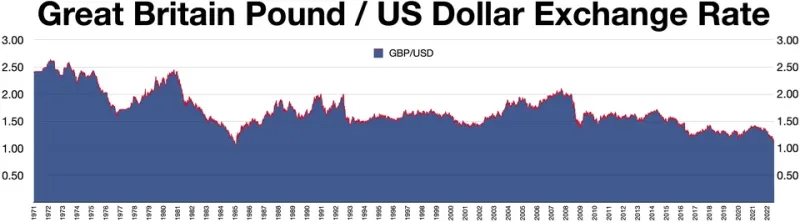
Photo: Wikideas1, CC0, via Wikimedia Commons
Most cross-border contracts between a U.S. mid-market company and its first foreign counterparty show visible effort where effort is expected: price, scope, delivery, warranty, governing law. Currency is handled last, in a sentence that reads like boilerplate. Amounts are payable at the prevailing exchange rate on the date of payment. That sentence is not a term. It is an agreement to disagree later, drafted in language that neither the controller nor the general counsel believes they own.
The cost of that ambiguity does not appear on the day it is written. It appears in the first month a receivable settles short of the amount that was booked, in the first margin review where the variance has no named owner, and in the first diligence request where a buyer asks who bore the currency risk under the contract and the honest answer is a reference to whatever the bank happened to do.
A placeholder dressed as a clause
Prevailing-rate language resolves almost nothing. Which rate: a central bank reference, a commercial selling rate, or the rate the payer's treasury desk actually achieved? Which date: invoice, due date, or the value date on the receiving account? Converted by whom, and evidenced by what document? Each gap looks small in isolation and becomes expensive in aggregate, because the party that loses on interpretation is usually the party with fewer options once the wire is already in motion.
For a U.S. seller invoicing in euros, a modest move between shipment and settlement can exceed the entire gross margin on the order. For a U.S. buyer paying a supplier in a currency that strengthens over a ninety-day term, the same move turns an approved purchase order into an unbudgeted overrun that no one approved. Neither outcome is a treasury failure. Both are the predictable result of leaving a pricing decision unwritten.
The exchange rate is not a cleanup item that finance addresses after the contract is signed. It is a price term, and it should be negotiated with the same discipline as the discount.
Four mechanisms, one decision
There is no universally correct allocation. There is only a choice, made explicitly and recorded where both parties can find it.
Invoice in the home currency. The U.S. party quotes and settles in dollars, and the counterparty carries the conversion. This is the simplest position to administer and often the easiest to defend internally, but it is not free: a foreign buyer or supplier will price the inconvenience back into the commercial terms, and in some markets a dollar-only stance reads as a reluctance to commit.
Fix the conversion rate. The parties agree a stated rate for a stated period, with a reset date and a defined source. This produces clean books and predictable margins, but someone is absorbing the divergence from market, and if the fixed rate drifts far enough from reality the contract becomes a renegotiation waiting to happen. Fixed rates need a review trigger, not just a number.
Set a band and a sharing formula. The contract names a reference rate and a tolerance, with movement beyond the band split according to an agreed percentage. This is the most defensible structure in a mid-market relationship because it keeps both parties engaged with the exposure rather than assigning it to the weaker negotiator. It also requires the most drafting discipline: the source, the observation window, the rounding convention, and the calculation method all have to be stated.
Pass through a named reference and define the mechanics. The parties agree that settlement follows a published rate, and then specify the publisher, the observation date and time, the fallback if the source is unavailable, and who bears bank and intermediary charges. A pass-through clause without those details is the prevailing-rate sentence with better vocabulary.
Each mechanism shifts risk, and each carries a cost the counterparty will reclaim elsewhere. The mistake is not choosing one of them. The mistake is assuming the choice was made because a sentence about exchange rates appears in the agreement.
Settlement timing is a currency term
Currency exposure accrues over the interval between the commitment to a price and the receipt of cash. Payment terms are therefore FX terms. Moving a foreign receivable from ninety days to forty-five halves the window in which a rate can move against the seller, and milestone or deposit invoicing removes exposure on the portion of the order that is invoiced early.
Companies frequently negotiate a hard-fought price and then concede ninety-day terms without connecting the two. Before the first invoice, it is worth asking directly whether the term is compensating for something the pricing did not, and whether the exposure that comes with it is inside the margin the deal was approved on.
Who owns the clause internally
The clause fails most often not because it was drafted badly but because nobody was assigned to watch it. Four functions touch it. Treasury sees the rate, the controller sees the variance, legal sees the wording, and the commercial owner sees the relationship. In most mid-market companies, no single person sees all four.
Name an owner before the first invoice. Set a monitoring threshold at which the divergence from the contractual basis is escalated rather than absorbed. Decide in advance who has authority to renegotiate and what evidence triggers that conversation. Record all of this in the contract file rather than in a treasury presentation that will not be reopened.
One further consequence deserves attention: a hedging program documented against a contract that does not identify the exposure precisely is difficult to support as an economic relationship when the auditor asks. The contract does not have to prescribe the hedge. It does have to state the exposure clearly enough that someone else could.
Before the first invoice, the file should hold
A short and unglamorous list, worth confirming once:
- The currency of invoicing and the currency of payment, stated separately, with the conversion responsibility assigned.
- The named rate source and the observation date and time, including the fallback if the source is unavailable.
- The rounding convention and which party bears it.
- Any band, threshold, or sharing formula, with the calculation method written out.
- Allocation of bank and intermediary charges.
- The escalation trigger and the named internal owner.
- For intercompany arrangements, confirmation that the rate used is consistent with the price used for customs valuation and transfer pricing purposes.
The audit and diligence tail
U.S. tax rules on foreign currency transactions mean the contractual rate can matter well beyond bookkeeping, affecting how a transaction is measured and when a result is recognized. Translation of a foreign operation's results adds a second layer. These are technical questions for counsel and the tax adviser, but the practical point is simple: a rate fixed in a contract, a rate applied by a bank, and a rate used in a ledger are three separate numbers, and the further apart they sit the more explaining someone will have to do.
Diligence follows the same fault line. A buyer examining a foreign target will ask who bore currency risk, whether the exposure was hedged, and whether the rate applied in the contract matched the rate used in the intercompany invoice and the customs entry. Small inconsistencies in that chain invite larger questions about how carefully the business was run.
Deciding who eats the move is a negotiation. Writing it down is governance. The clause takes twenty minutes at term sheet stage and considerably longer to reconstruct after the first disputed settlement.